

If you are looking for hands-on engaging activities for your upper elementary students, I have great ideas for you. These 3 STEM Challenges are perfect for learning more about seeds and flowers.
Are you ready for some Seed Projects in STEM? I have some great ideas, but first I have a story.
When I was a little girl my Popaw had a farm and every spring he plowed his fields with a wooden plow pulled by a mule. One summer he planted so many watermelon plants that he later had to have neighboring farmers come and help gather them with pickup trucks. That was the same summer he told me not to swallow watermelon seeds.
“Young’un if you swallow these little seeds a watermelon plant will grow in your belly.”
I believed him and I would rake those seeds out of my slice of melon and leave a pile on the picnic table. I found out later that he would save those seeds and plant them the next spring. Sweet memories!
“In this post, for your convenience, you may find Amazon Affiliate links to resources. This means that Amazon will pass on small percentages to me with your purchase of items. This will not create extra costs for you at all! It will help me keep this blog running!“
Seed Projects Perfect for Springtime (or any time)!
We have several seed projects that we love so much and some unusual ideas about them that we learned.
Let’s get started with a few unusual things about seeds! Here are the first few items which all have to do with seed dispersal.
- Seeds stick to some animals and later drop off.
- Some seed pods explode.
- Sometimes the wind carries seeds away.
Seed Dispersal turned out to be a learning event.

We read a little about seed dispersal first and the story about how velcro was invented is part of this. You have to admit that is unusual! But, true!
A man walking his dog found that certain seeds would stick to the dog’s fur more than others and the hook-and-loop closure system was born. Some of our groups had to make a seed dispersal model of how seeds attach to animals.
In the photo, you can see the “chicken” made by one team. They attached the seeds and then shook the chicken to make them drop off.. This is exactly what happened with the invention of velcro!
Explosion Dispersal
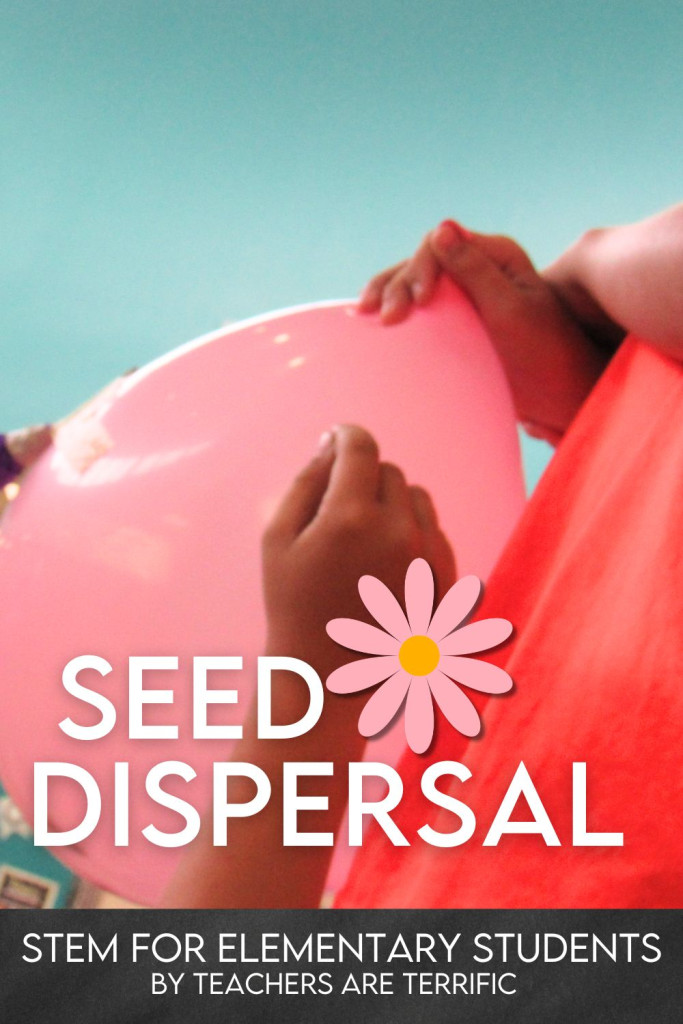
Then there is the exploding part! We watched a video of seeds that pop open in a violent explosion that scatters the seeds all over.
Students loved the video and couldn’t wait to make something explode. Thank goodness I had some balloons.
In the photo, you can see students trying to pop the balloon to get their seeds to scatter. The balloon represents the exploding seed pod.
Seed Dispersal by Wind Movement

A few groups were assigned the dispersal method of “wind” movement.
Of course, this meant teams built parachutes the seeds would be dropped from.
Dropping the parachutes was fun and some teams would shake the seed parts to make them fall.
More Unusual Seed Facts
- Getting seeds inside a bird feeder is harder than you think.
- So is getting the seeds out of the birdfeeder.
And, yes we made bird feeders! Take a look!
Build a Working Birdfeeder

My fifth graders had a blast designing and building these bird feeders.
I had an array of cardboard boxes and empty bottles and they chose what they needed based on their design.
They put it all together with hot glue and tape and then it was time to decorate. We had so many creative bird feeders with perches for the birds to sit on and little spouts to use when pouring in the seeds.

We did encounter a problem with some of the birdfeeders!
Students asked, “How do we get the seeds into the feeder part?”
In the photo to the left, the bottle didn’t hold a lot of seeds because of the placement of the hole.
This provided more opportunities for problem-solving.
Groups had to redesign to find ways to get the seeds in and ways for the birds to get them out!
Third grade also had some unusual things occur!
- A flower has an ovary and that’s where you will find the seeds.
- Flowers and their parts come in all shapes and sizes!
3-D Flowers

Third graders were learning about the parts of a flower in their regular classroom so we just extended that study in the lab.
We talked about what each of the parts of the flower does and even dissected a real flower.
Next, we created our flower models. These had to have all the parts represented by the materials I made available and then the parts had to be labeled.

Learning all the parts was fun and then I heard this…
“What is the oh-vair-ee?”
Ah, the ovary. So, we stopped to watch a Magic School Bus video which explains it perfectly and then we went back to creating our flower models.
As you can see from the photos the flowers were amazing and different and all sizes and shapes. And that is exactly the way they are in nature, too. Which makes flowers very unusual!
Let’s Make A Flip Book about Seeds
We love making flip books as part of our studies and I have 2 fabulous versions that work well with studying seeds and flowers.


These 2 flip books would be a great way to introduce these topics or use them at then end for assessment! Click on many of the images to see details at my store!
I know you will find these Seed Projects highly engaging for your students. Try them all and let me know which is your favorite!
RELATED ARTICLES

STEM Materials We Use the Most!


